
This tradition was introduced to the Mongolian steppes by the Kazakhs, who are one of Mongolia’s largest ethnic minorities.
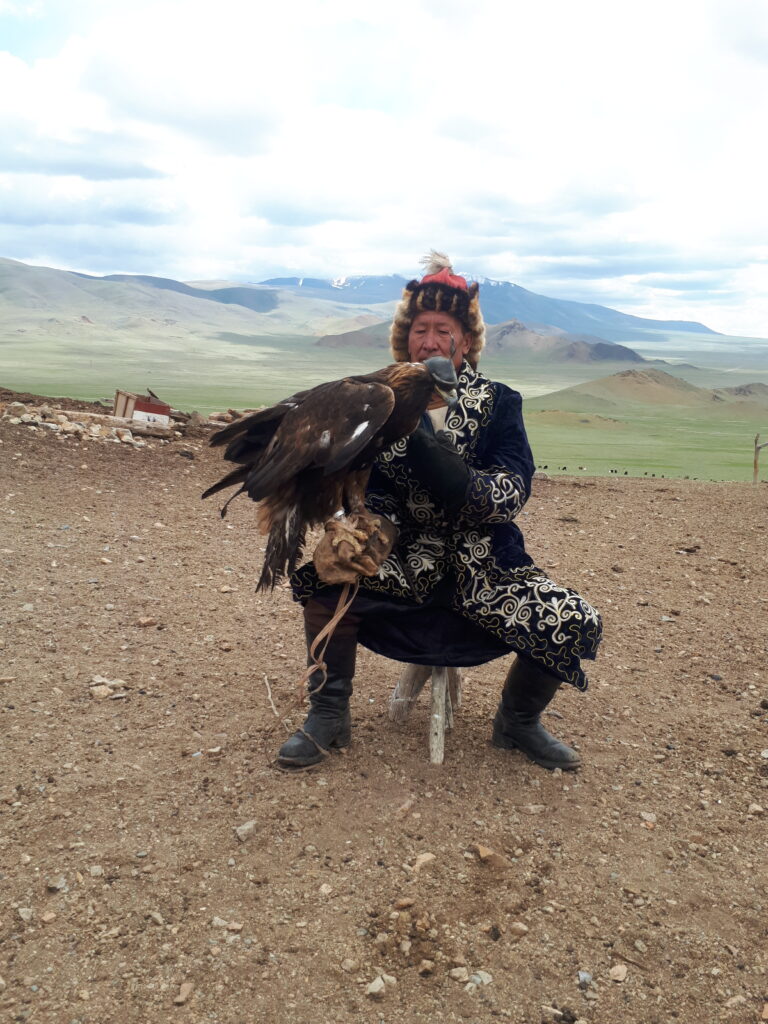
Mongolian eagle hunters, renowned for their expertise, continue the ancient tradition of eagle hunting, a practice particularly prominent among the Kazakh ethnic group in western Mongolia. This unique craft has been handed down through generations, reflecting a deep cultural heritage.
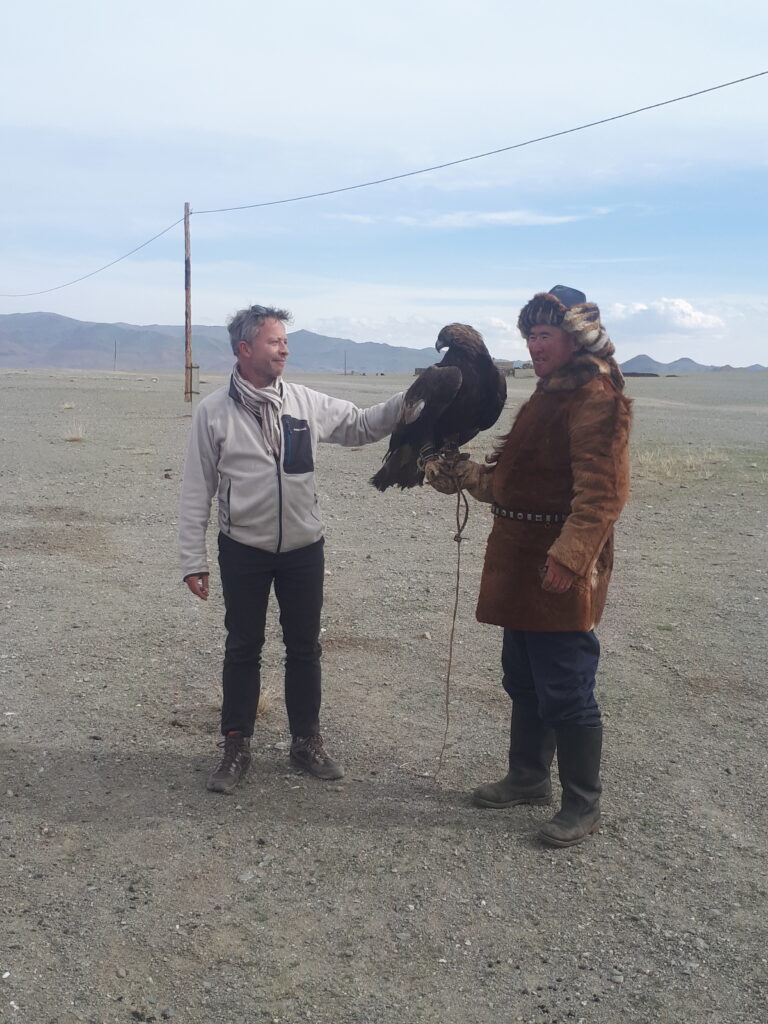
Eagle hunting involves training golden eagles to hunt small game, such as foxes and rabbits. The bond between hunters and their eagles is profound, as they nurture and train these majestic birds from a young age. These eagles are not merely tools but esteemed partners in the hunt, treated with great respect.
Eagle hunters proudly display their skills and the abilities of their eagles during competitions and festivals, which attract spectators from around the globe. These events offer a breathtaking view of the harmonious partnership between humans and animals.
From September to March, during the hunting season, eagle hunters traverse the rugged mountains and valleys of Mongolia in pursuit of their quarry. This challenging endeavor demands physical strength, endurance, and a deep understanding of the terrain.
Visitors seeking to immerse themselves in the art of eagle hunting can arrange to spend time with local hunters, gaining firsthand insight into their traditional techniques. This experience provides a unique opportunity to witness the skill and dedication involved in this ancient practice.
Locally, eagle hunters are known as Berkutchi. A Berkutchi is an individual who hunts with golden eagles, and mastering this art requires more than just taming the bird—it involves forming a deep connection with it. Berkutchi often reside in remote areas, preserving their traditions and passing them down through generations.
The golden eagle, with its impressive wingspan, powerful beak, and strong talons, is aptly named for the golden plumage on its neck and nape. This magnificent bird is both a symbol of strength and a vital partner in the art of eagle hunting.
Tour itinerary for hunting with eagles in western Mongolia

Short video from BBC about western Mongolian eagle hunting:
THE BEST TIME TO DO THIS TOUR
This tour is available from the September and the whole winter until the middle of April.
Here’s what you can expect to see and experience during the “Hunting with Eagles” tour:
- Authentic nomadic life
- Visits to genuine eagle hunters and their homes
- Opportunities for hiking and trekking
- Immersion in local culture
- Meetings with Shamans
- Stunning natural landscapes
- Horseback riding
- Local music and cultural performances
- Historical sites
- Beautiful, pristine lakes and rivers
- Exploration of the land associated with Chinggis Khan
- A real eagle hunting experience
There are only good reasons to work with us:
Here’s why you should choose our Mongolian travel agency: We are dedicated to making your vacation in Mongolia truly unforgettable. From meticulous trip planning to delivering authentic experiences, we ensure every aspect of your journey is exceptional. Our added touches and unique offerings set us apart from other Mongolia-based travel agencies. We take pride in our innovative approach and commitment to originality.
Eagle Hunting: A Traditional Winter Pursuit
Eagle hunting, a time-honored practice that dates back thousands of years, remains a significant part of the cultural heritage in many regions, particularly in Central Asia. In this unique form of hunting, trained eagles, typically golden eagles, are used to catch prey such as foxes, hares, and other small animals. The relationship between the hunter and the eagle is one of deep trust and skill, with the eagle acting as the primary hunter and the human as the guide and protector.
Why Eagle Hunting Is a Winter Activity
Eagle hunting is traditionally a winter activity for several ecological and biological reasons, primarily revolving around the behavior and lifecycle of the fox, the main target for the eagle.
- Fox Breeding Cycles: The primary prey for eagle hunters is the fox, whose breeding season begins in the early spring. Foxes typically start mating in March, with females giving birth to litters of cubs around April or May. The summer months are a critical time for the survival of these cubs, as they rely on their mothers for nourishment and protection. During this period, foxes are particularly protective of their young and less likely to venture into open areas, where they might be vulnerable to eagle attacks.
- Summer Protection for Fox Cubs: Summer is a time of growth for the fox cubs, and they remain in their dens, where they are cared for and protected by their mothers. If hunting were allowed during the summer, it would risk destabilizing the fox population, as many cubs would be left without a mother during their vulnerable developmental stage.
- Optimal Hunting Conditions: Winter provides the ideal conditions for eagle hunting. Foxes are more active and easier to spot during the colder months, as the lack of foliage and the snow-covered landscape make their movements more visible. Additionally, foxes are in search of food to sustain themselves through the harsh winter, making them more likely to roam and fall prey to the eagle’s keen hunting skills.
Conservation Considerations
In many countries where eagle hunting is practiced, regulations are in place to protect wildlife populations and ensure sustainable hunting practices. This includes adhering to seasonal restrictions that prevent hunting during the summer months when the survival of fox cubs is at stake. By restricting hunting to the winter, eagle hunters help maintain a balanced ecosystem, allowing fox populations to thrive and ensuring the long-term success of this ancient tradition.
Eagle hunting is not just a method of procuring food, but a deeply rooted cultural practice that reflects the harmony between humans, animals, and nature. By respecting seasonal boundaries, eagle hunters contribute to the conservation of the species they hunt, ensuring that both the fox and the eagle continue to thrive for generations to come.